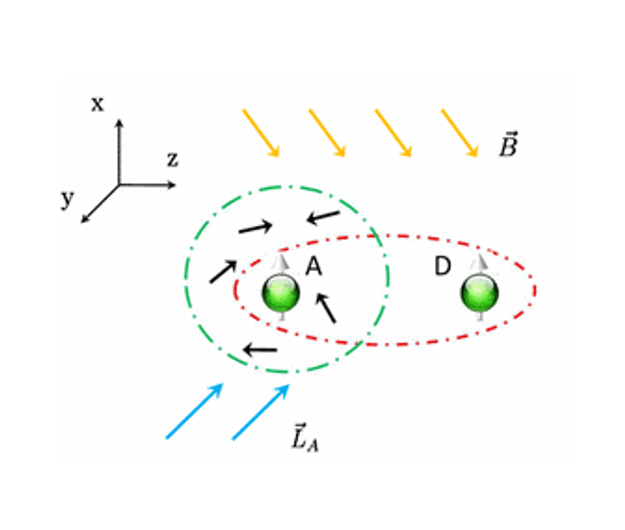
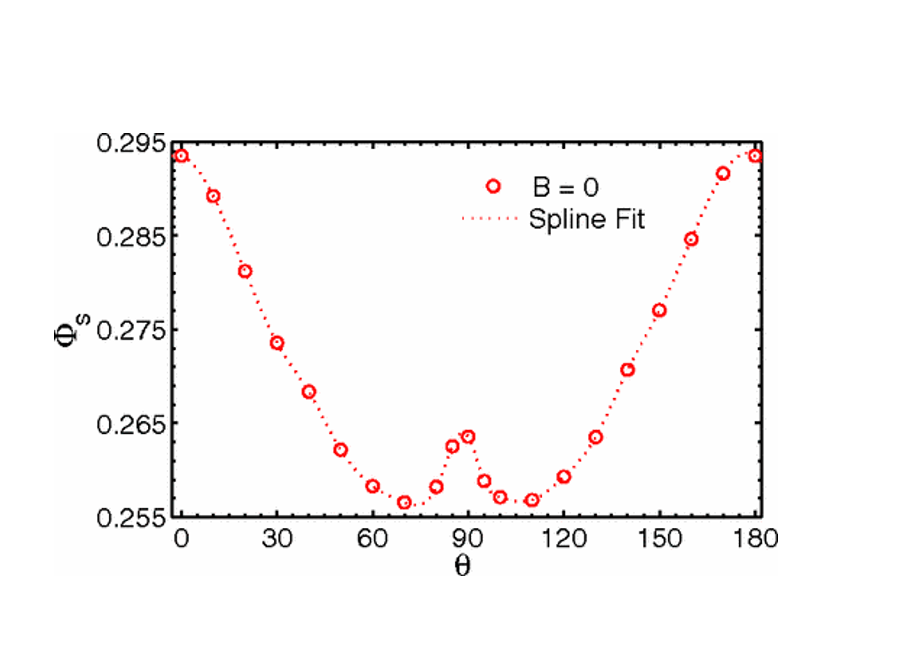
Here, we demonstrate how to optimize the design of a chemical compass with a much better directional sensitivity simply by a gradient field, e.g., from a magnetic nanostructure.
Wei-Bo Gao, Xing-Can Yao, Jian-Ming Cai, He Lu, Ping Xu, Tao Yang, Chao-Yang Lu, Yu-Ao Chen, Zeng-Bing Chen & Jian-Wei Pan , Nature Photonics 5, 117–123 (2011)
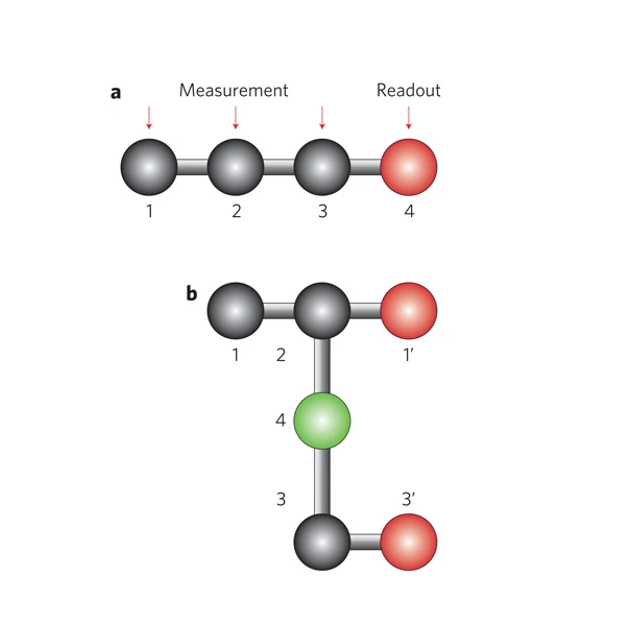
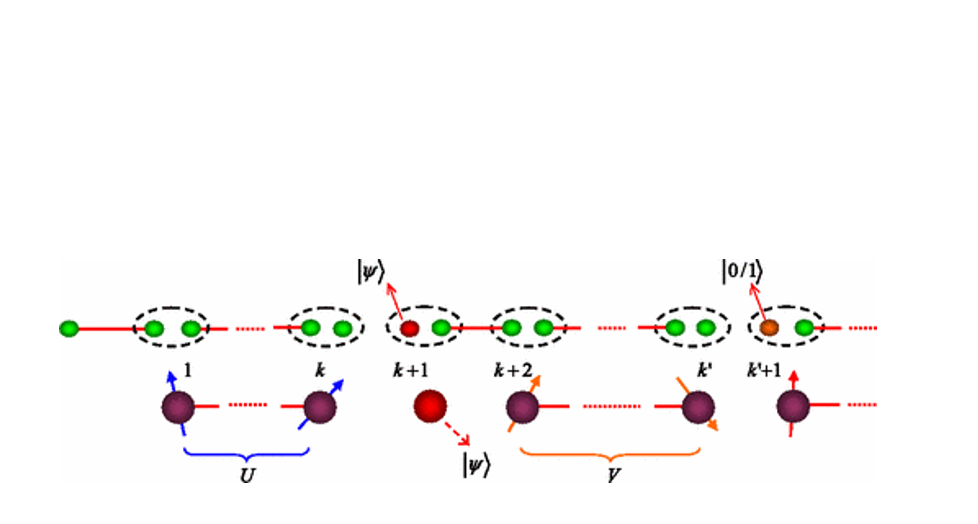
Here, we report an experimental demonstration of every building block of such a model. With four-qubit and six-qubit states, which are not in the cluster-state category, we have realized a universal set of single-qubit rotations, two-qubit entangling gates and also Deutsch's algorithm.
Jianming Cai, Gian Giacomo Guerreschi, and Hans J. Briegel, Phys. Rev. Lett. 104, 220502 (2010)
Here, we show how quantum control can be used to either enhance or reduce the performance of such a chemical compass, providing a new route to further study the radical-pair mechanism and its applications.
J.-M. Cai, W. Dür, M. Van den Nest, A. Miyake, and H. J. Briegel, Phys. Rev. Lett. 103, 050503(2009)
Here, we show that the new resources are universal state preparators after all, and must therefore exhibit a whole class of extremal entanglement features, similar to the cluster states.
Jianming Cai and Wei Song, Phys. Rev. Lett. 101, 190503(2008)
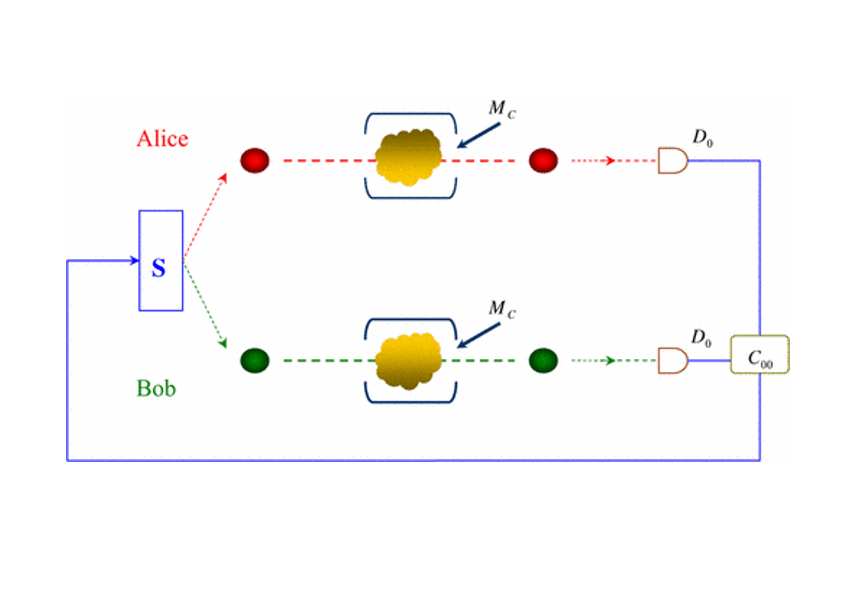
we demonstrate that rank-1 local factorizable projective measurements, which are achievable with only one copy of an entangled state involved at a time in a sequential way, are sufficient to directly determine the concurrence of an arbitrary two-qubit entangled state.